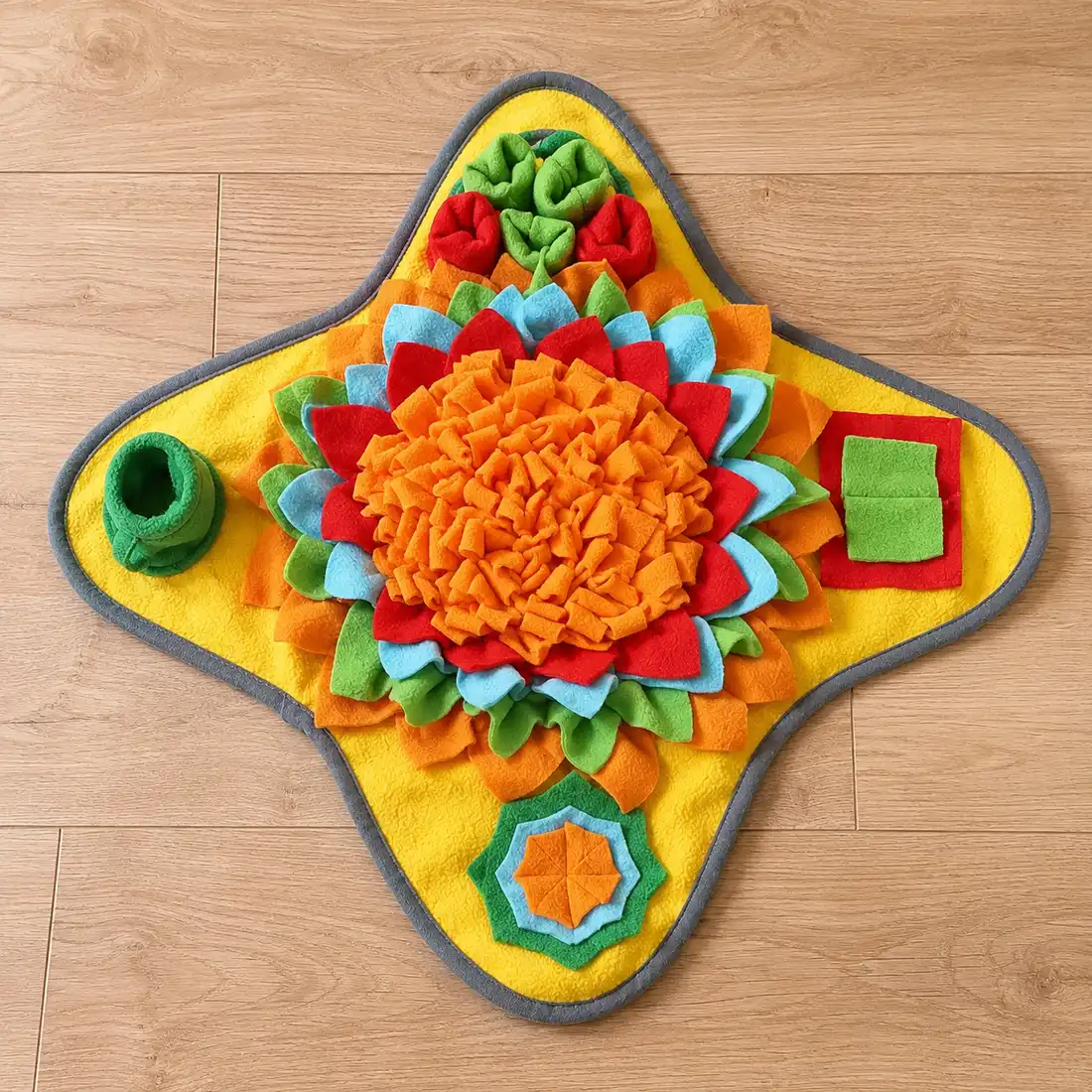
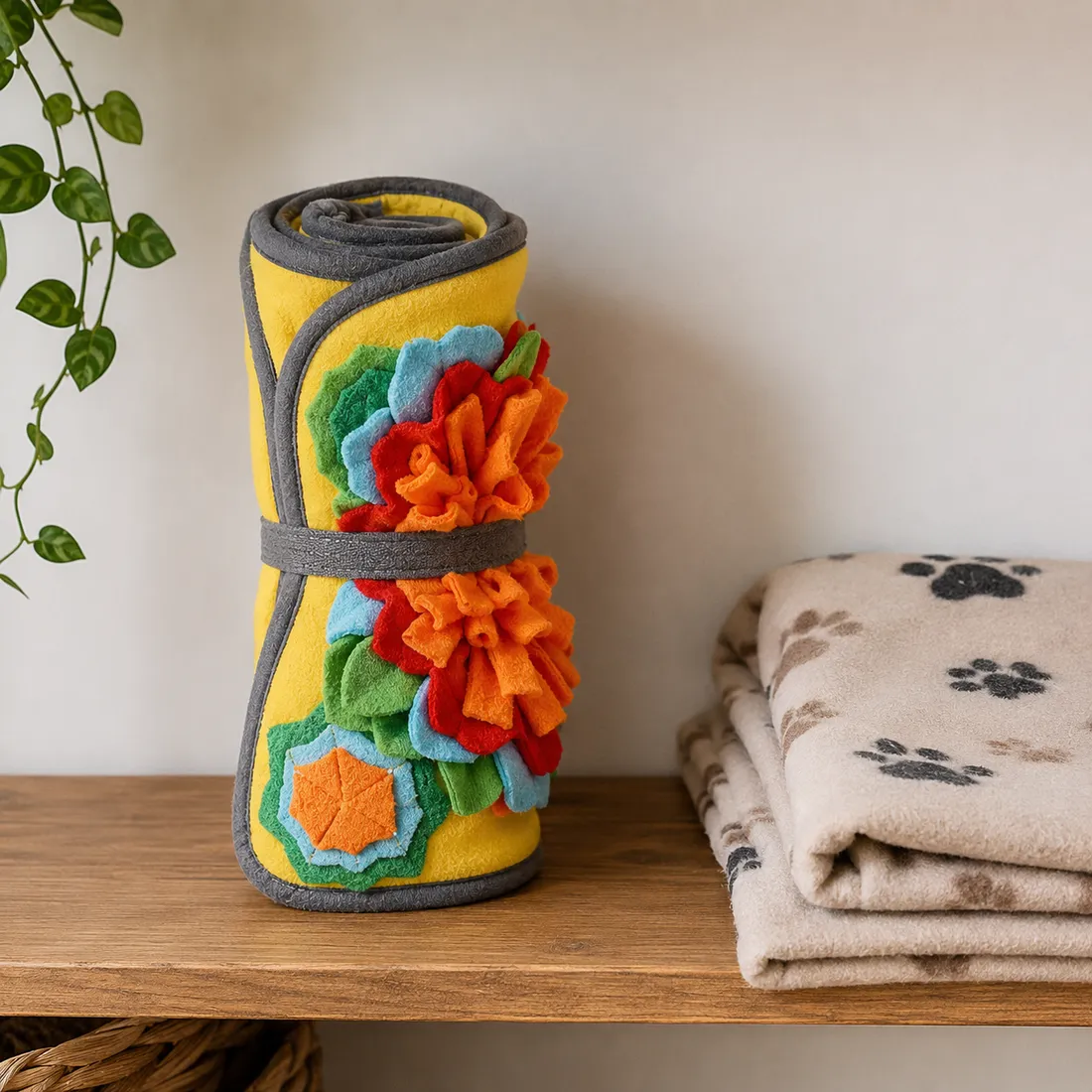
The snuffle mat for dogs that turns dinner into a hunt
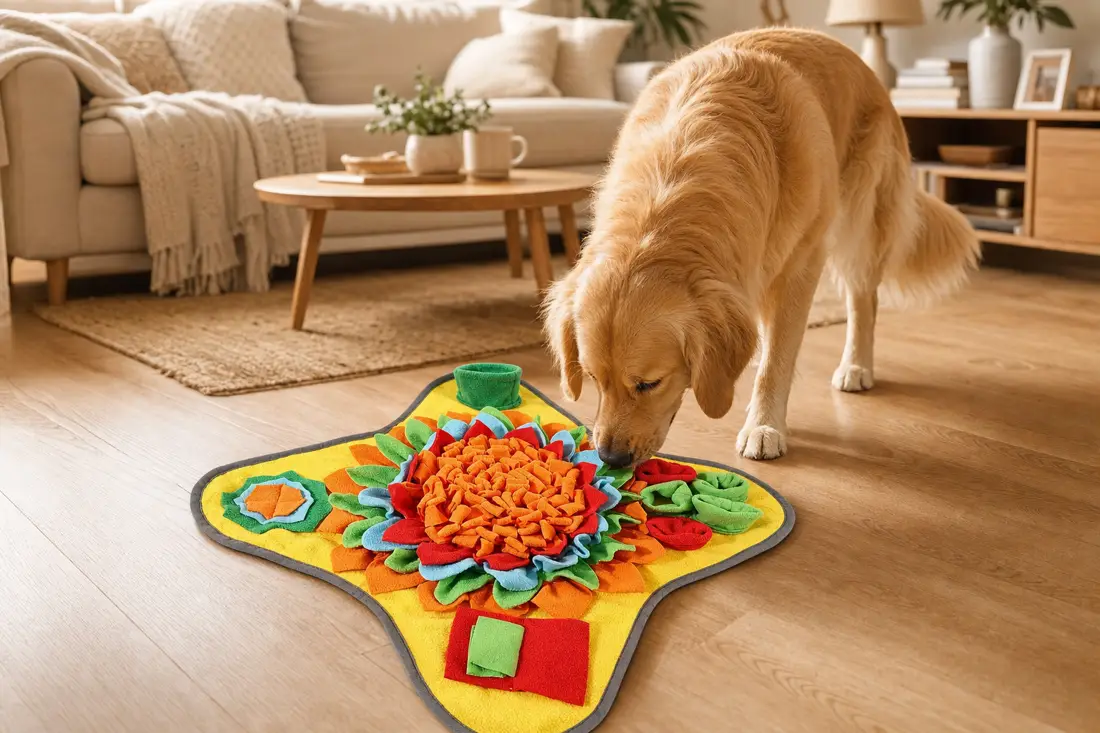
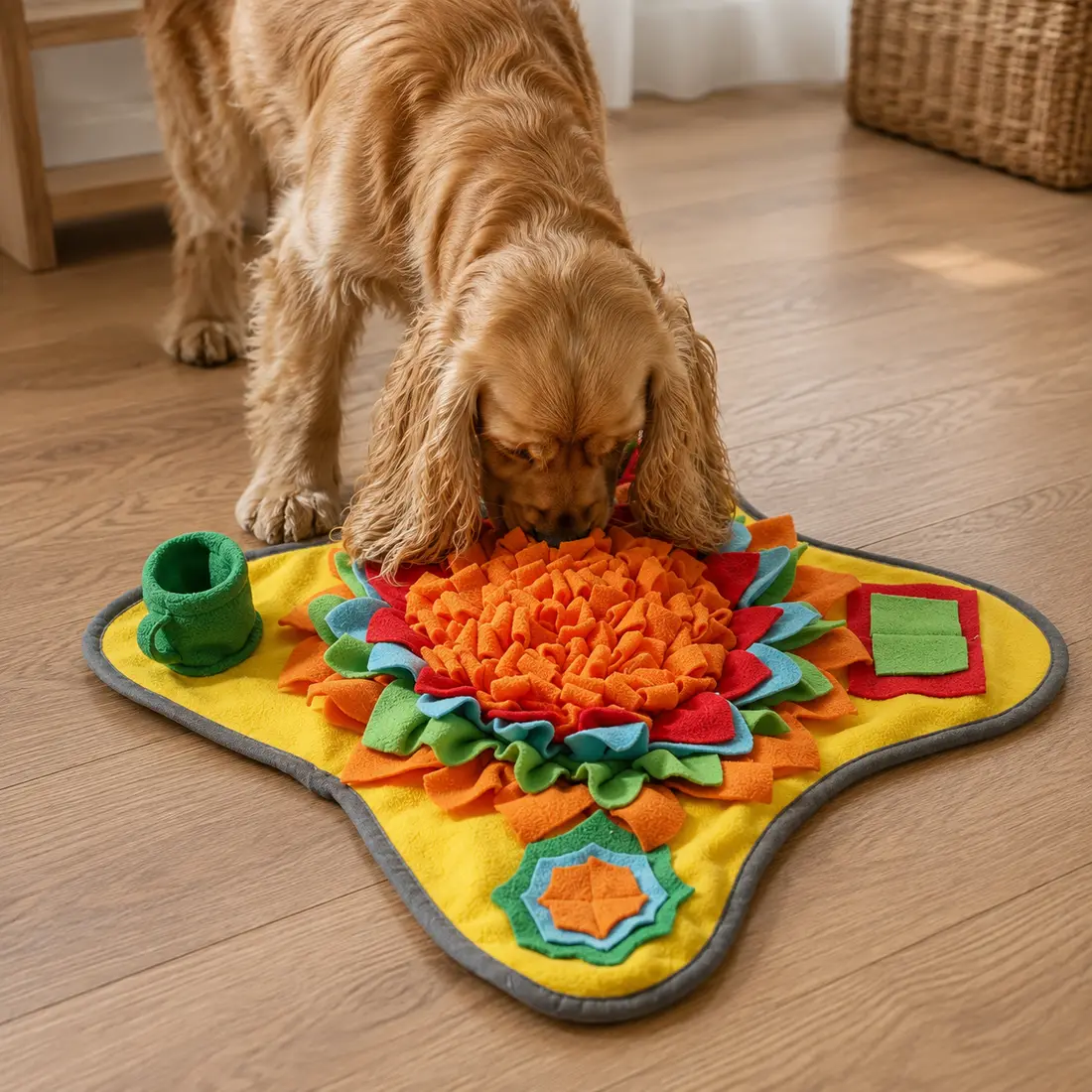
Scatter kibble in the shaker-fleece folds and your dog forages nose-first, so a rushed meal becomes ten quiet minutes of sniffing.
🚨 Only a few left in stock
Secure checkout. You can add more packs before you pay.
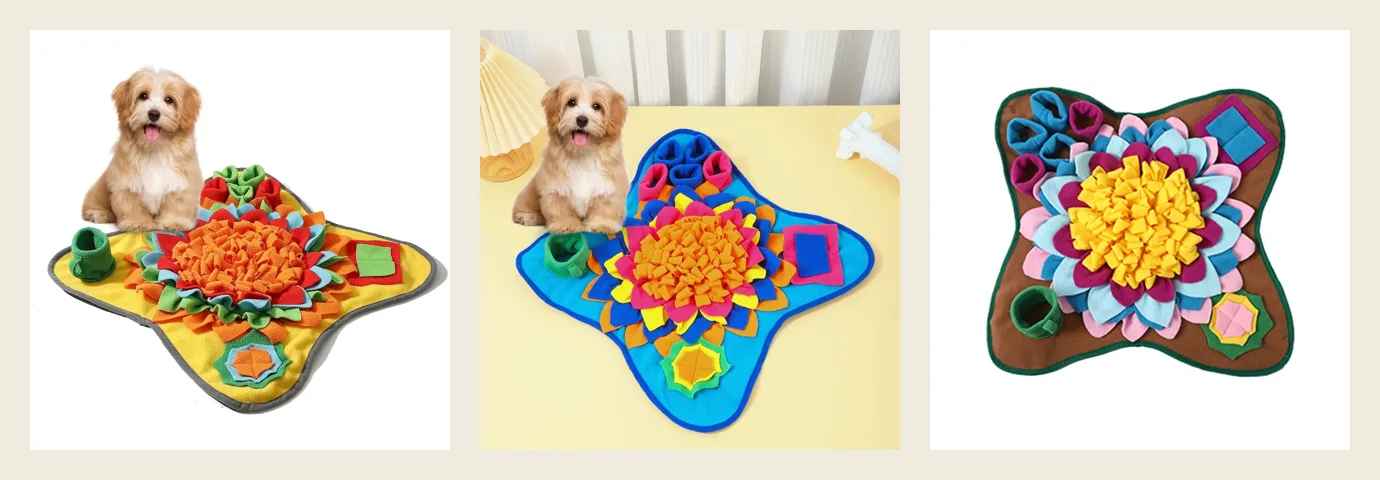
Mixing colors costs nothing: pick a different colorway for each mat in the pack and your choice travels with the order.
Using a snuffle mat for puppies, safely
Puppies are exhausting in a specific way. They have huge curiosity, short attention spans and bodies that are still growing, which means the usual advice to just tire them out with exercise only goes so far. You cannot run a twelve-week-old puppy for an hour, and you should not. What you can do is give the brain a job. A snuffle mat does exactly that, turning part of a meal into a search that a puppy finds genuinely absorbing. This guide covers why it works for young dogs, how to introduce it step by step, the safety points that matter most at this age, and how to move toward feeding full meals on the mat.
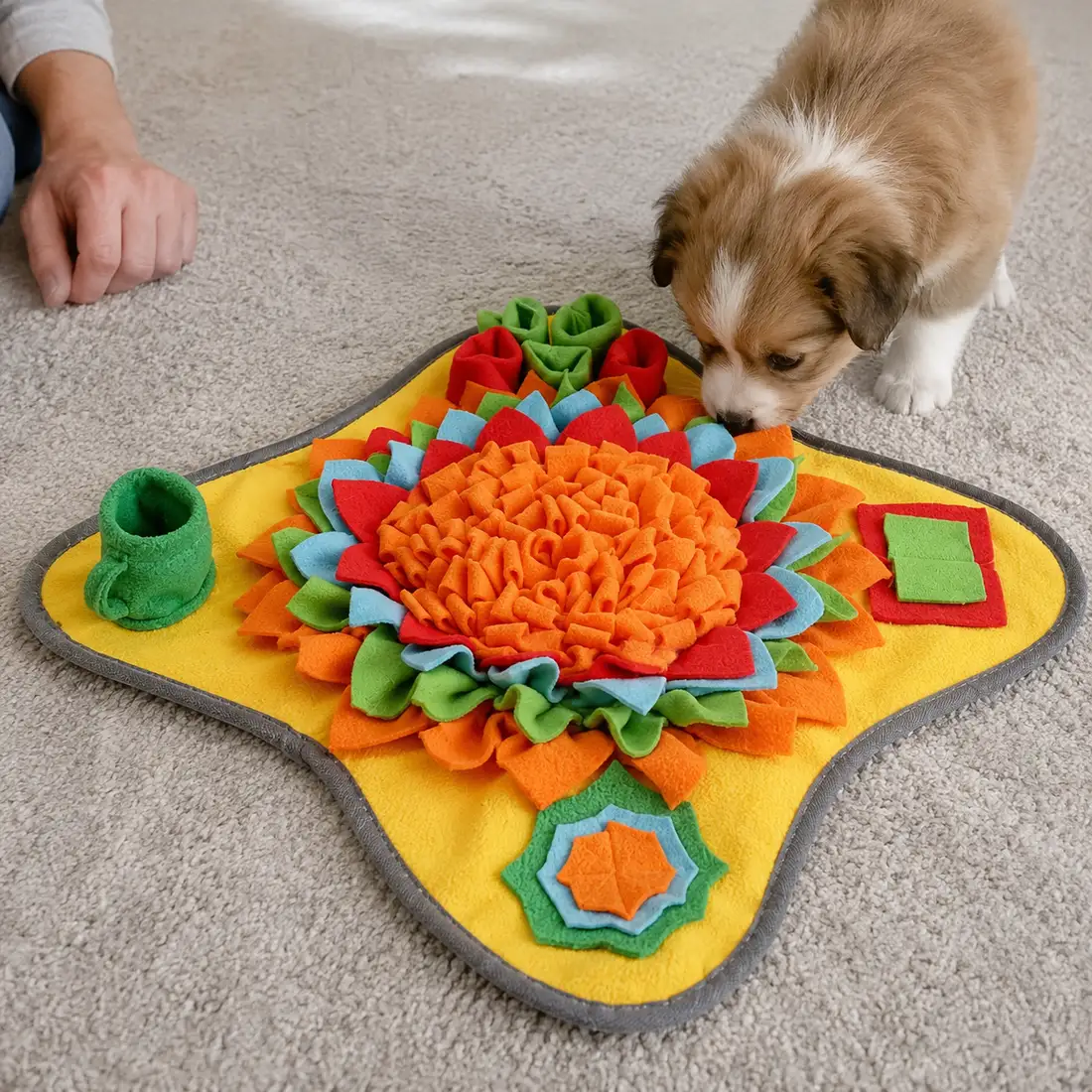
Why nose work suits puppies
Young puppies should not do repetitive high-impact exercise while their joints are still developing, so brain games carry a lot of the load. Foraging fits perfectly. It is self-paced, low to the ground and driven by the sense a puppy relies on most. A dog reads the world through its nose long before it trusts its eyes, and giving a puppy permission to use that sense is both easy and deeply rewarding for them.
scent receptors a dog uses to explore the world, versus about 6 million in a human, which makes sniffing games ideal for puppies
— PBS NOVA, 2012
larger share of the brain devoted to analyzing smell in dogs than in humans, so scent work is real mental exercise
— PBS NOVA, 2012
of nose-work games raised pet dogs' optimism in a controlled study, a welfare gain worth building early
— Duranton & Horowitz, Applied Animal Behaviour Science, 2019
That last finding is a nice reason to start young. Building calm, rewarding sniffing habits into a puppy's routine is not just about killing time before the next nap, it appears to support a more optimistic outlook. A puppy that learns early that using its nose leads to good things tends to be a more settled adult.
How to introduce a snuffle mat to a puppy
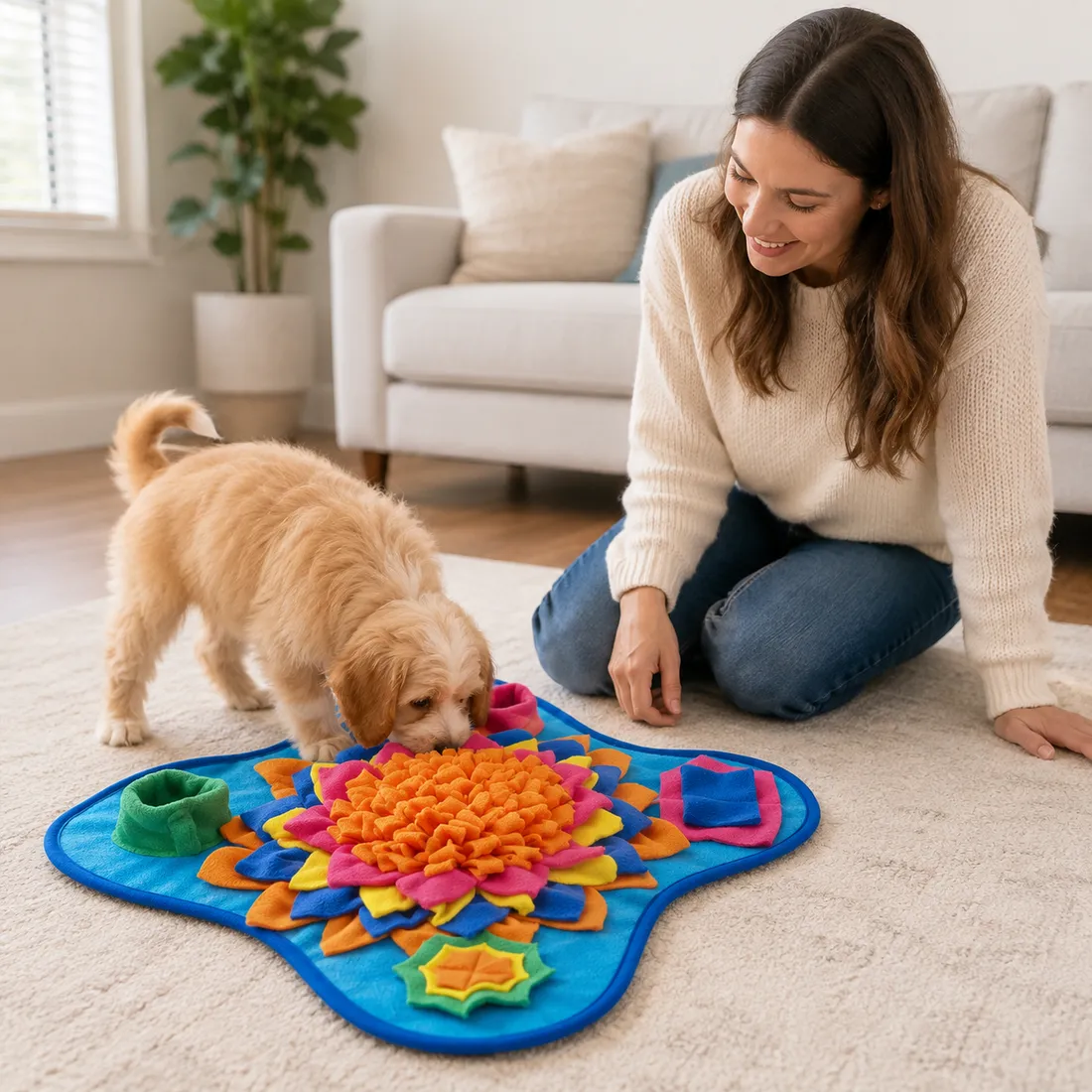
Go slowly and make the first wins easy. The goal of the first few sessions is simply for your puppy to learn that sniffing the fleece pays off. Rush it and a puppy either gives up or decides the mat itself is the toy.
- Make the first search obvious. Scatter a few pieces of your puppy's normal kibble on top of the fleece, in plain sight, so the very first sniff finds a reward. Let your puppy watch you do it.
- Keep it short. Five minutes is plenty at first. Stop while your puppy is still interested rather than waiting for them to wander off, then put the mat away so it stays novel.
- Raise difficulty gradually. Once your puppy clears the surface easily, press a few pieces down into the deeper fleece so they have to nudge and dig. This is where a dense mat earns its keep, because there is somewhere to actually hide the food.
- Use food they already know. Start with their regular diet so nothing upsets a young stomach. Save higher-value treats for later, when you want to add a challenge.
- Stay right there. Every session is supervised. You are watching for foraging, and stepping in the moment sniffing turns into biting or pulling at the mat.
Safety points that matter most for puppies
This is the single most important thing on the page. A fleece mat is soft on purpose, which is what makes foraging feel natural, and it is also why a determined puppy could work a strip loose and try to swallow it. That is a supervision issue, not a design flaw, and the fix is simple: stay in the room, keep sessions short, and put the mat away between uses. If your puppy is in a heavy chewing or teething phase and keeps going for the fabric rather than the food, pause the mat, offer an appropriate chew instead, and revisit nose work in a calmer moment.
Moving from bowl to mat, and controlling portions
Feeding on the mat is a natural next step, and it doubles as a gentle way to manage weight. Portion creep is a real problem in dogs, and building good habits while your puppy is young pays off for years. Because you are still measuring the same amount of food, you get the enrichment without adding calories, while the search itself slows a gulping eater down.
of US dogs are overweight or obese, so building slow, measured feeding habits early matters
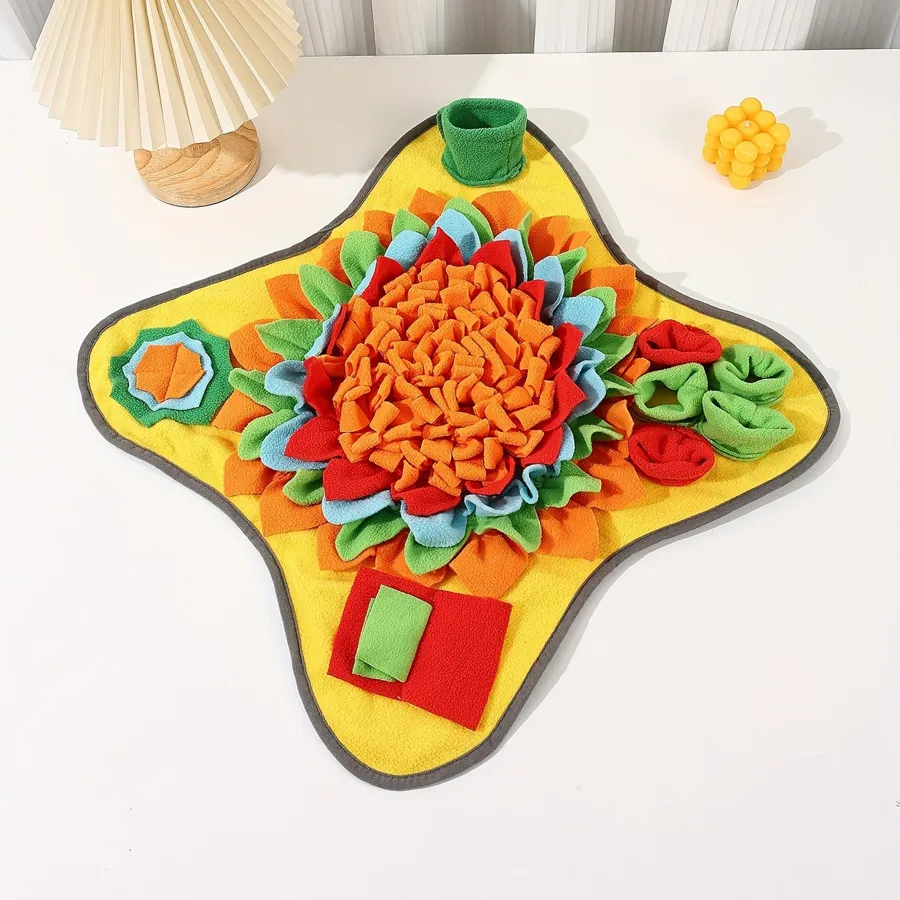
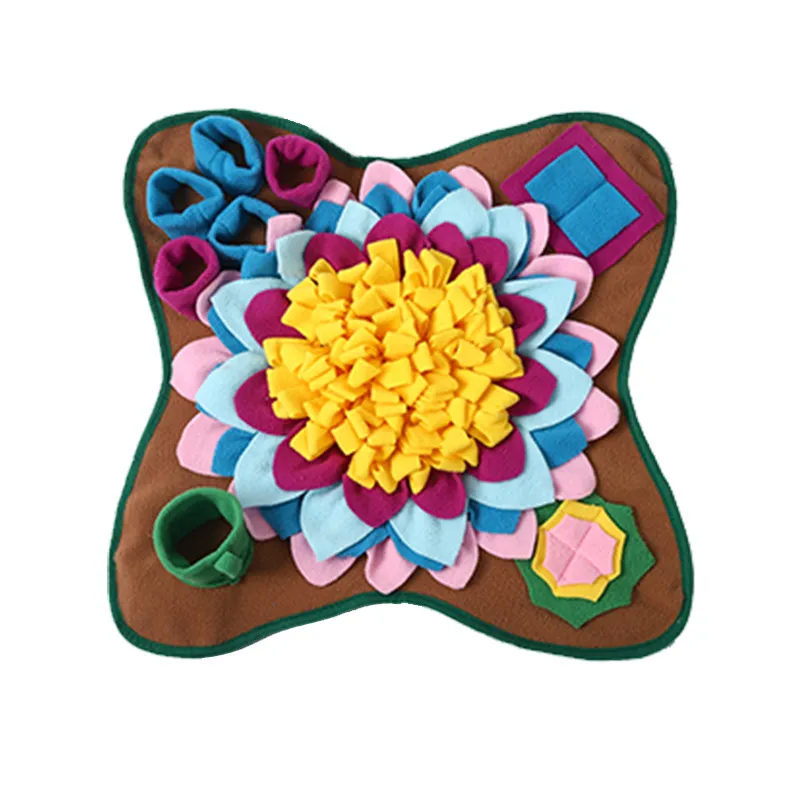
A quick word on which mat suits a puppy. Size still matters, but for a young dog it is less about a huge surface and more about density and a base that grips. A puppy pushing its nose into the fleece needs the mat to stay put, and it needs somewhere to hide the food as skills grow. Our mat gives a real 19.2 by 19.2 inches (48 by 48 cm) of surface with deep shaker fleece and a non-slip base, so it works from the first easy scatter right through to hiding a full measured meal. It is machine washable too, which you will appreciate the first time a puppy tracks something onto it. If you want the full criteria breakdown, our guide to choosing the best snuffle mat covers every point.
Single mat
$29.95 $49.95
Bundles for multi-dog homes: 2-pack $49.95, 3-pack $64.95.
Free shipping · dispatched in 1-2 business days · 30-day money-back guarantee
If there is also an older dog in the house, the adjustments run the other way and we cover them separately in snuffle mats for senior dogs.
Want more ways to keep a young dog busy between naps? Our dog enrichment ideas list gives you a week of easy games, the explainer on what a snuffle mat is covers the basics, and are snuffle mats good for dogs looks at the evidence. You can see how real puppies and dogs use ours on the reviews page, learn about the team on our about page, and reach us any time through contact.
Puppy snuffle mat questions
What age can a puppy use a snuffle mat?
Most puppies can start scattering food on a snuffle mat as soon as they are eating solid food confidently, often around 8 to 10 weeks. Keep the first sessions very short and easy, use their normal food, and always stay in the room to supervise.
How long should a puppy use a snuffle mat?
Start with 5 minutes and build to 10 as your puppy gets the idea. Young dogs tire quickly and lose focus, so short, successful sessions are better than long ones. End while your puppy is still enjoying it, then put the mat away.
Is a snuffle mat good for teething puppies?
A snuffle mat can help a teething puppy channel energy into sniffing rather than chewing furniture, but it is not a chew toy. If your puppy tries to bite and pull the fleece rather than forage, take the mat away, offer a proper chew, and try again later.
Can I feed a whole meal on a snuffle mat?
Once your puppy forages confidently you can serve part or all of a measured meal on the mat instead of a bowl. Weigh the food as usual so portions stay controlled, and keep supervising, since mealtime on the mat is still an activity, not unattended feeding.