
· By Erin Walsh, Canine Enrichment Trainer
12 Dog Enrichment Ideas That Actually Work
Enrichment has become a buzzword, and like most buzzwords it has picked up a lot of noise. Owners tell me they feel guilty for not buying enough gadgets, or they assume enrichment means an expensive puzzle toy that the dog solves once and ignores forever. Neither is true. Enrichment is just the practice of letting a dog be a dog, on purpose and a little every day, and most of the best ideas cost nothing.
I have grouped twelve activities I actually use by the need they meet, because a rounded dog needs more than one kind of stimulation. A dog fed only nose-work is different from a dog fed only fetch, and the trick is variety rather than intensity. Work through the categories below, pick two or three that fit your dog and your week, and rotate them so nothing goes stale.
What counts as enrichment
Enrichment covers anything that lets a dog use its instincts in a safe, satisfying way. That includes the nose above all, because scent is a dog's dominant sense, along with chewing, chasing, foraging, earning food, solving small problems, and simply exploring new places. The reason nose-based activities carry so much weight is the sheer size of a dog's scenting equipment.
olfactory receptors in a dog's nose, versus about 6 million in ours, which is why letting a dog sniff is one of the richest forms of enrichment there is
Nose-work and food ideas
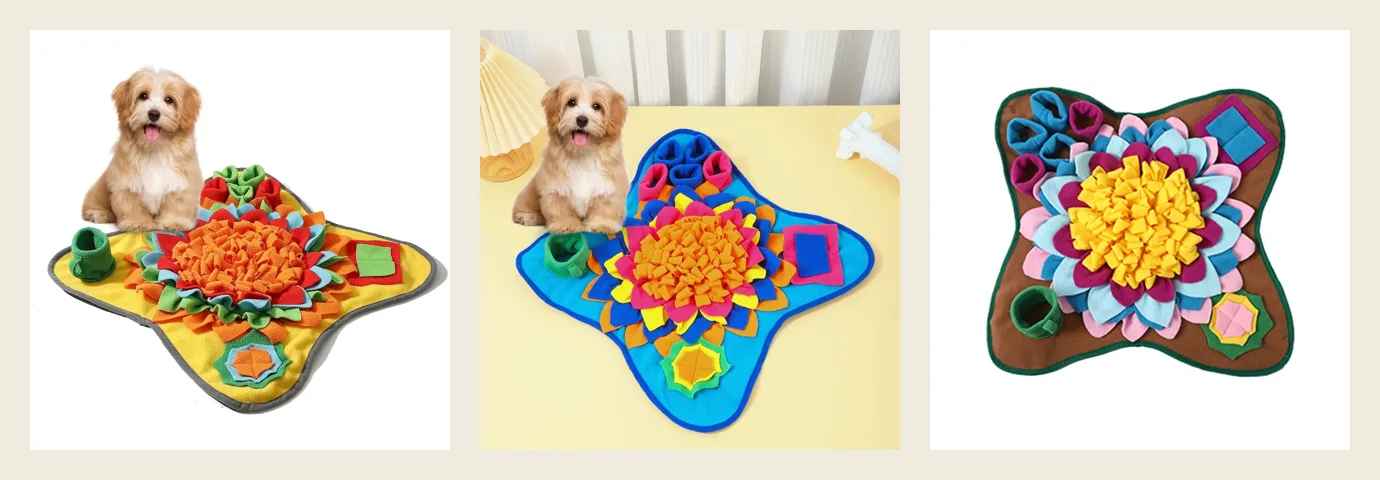
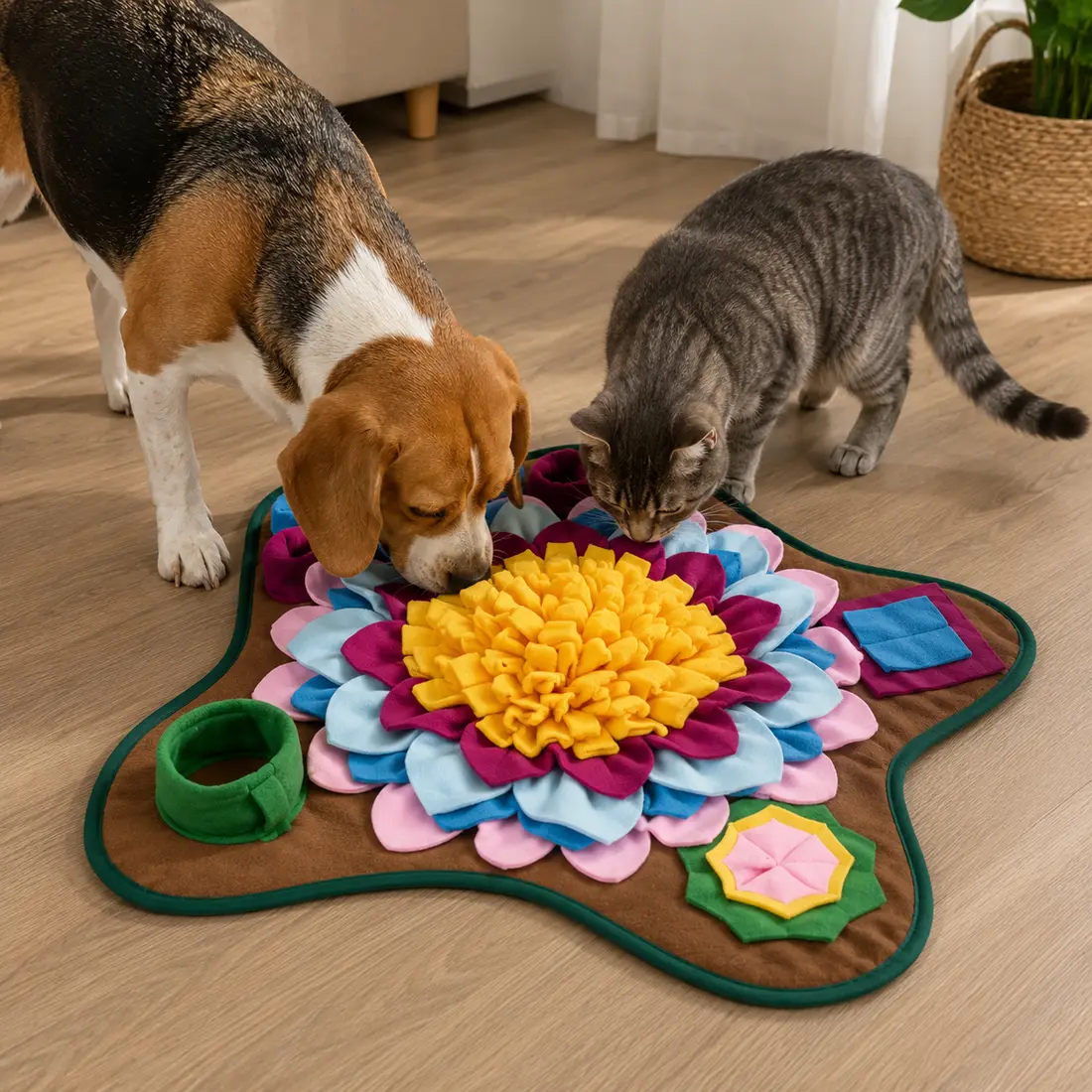
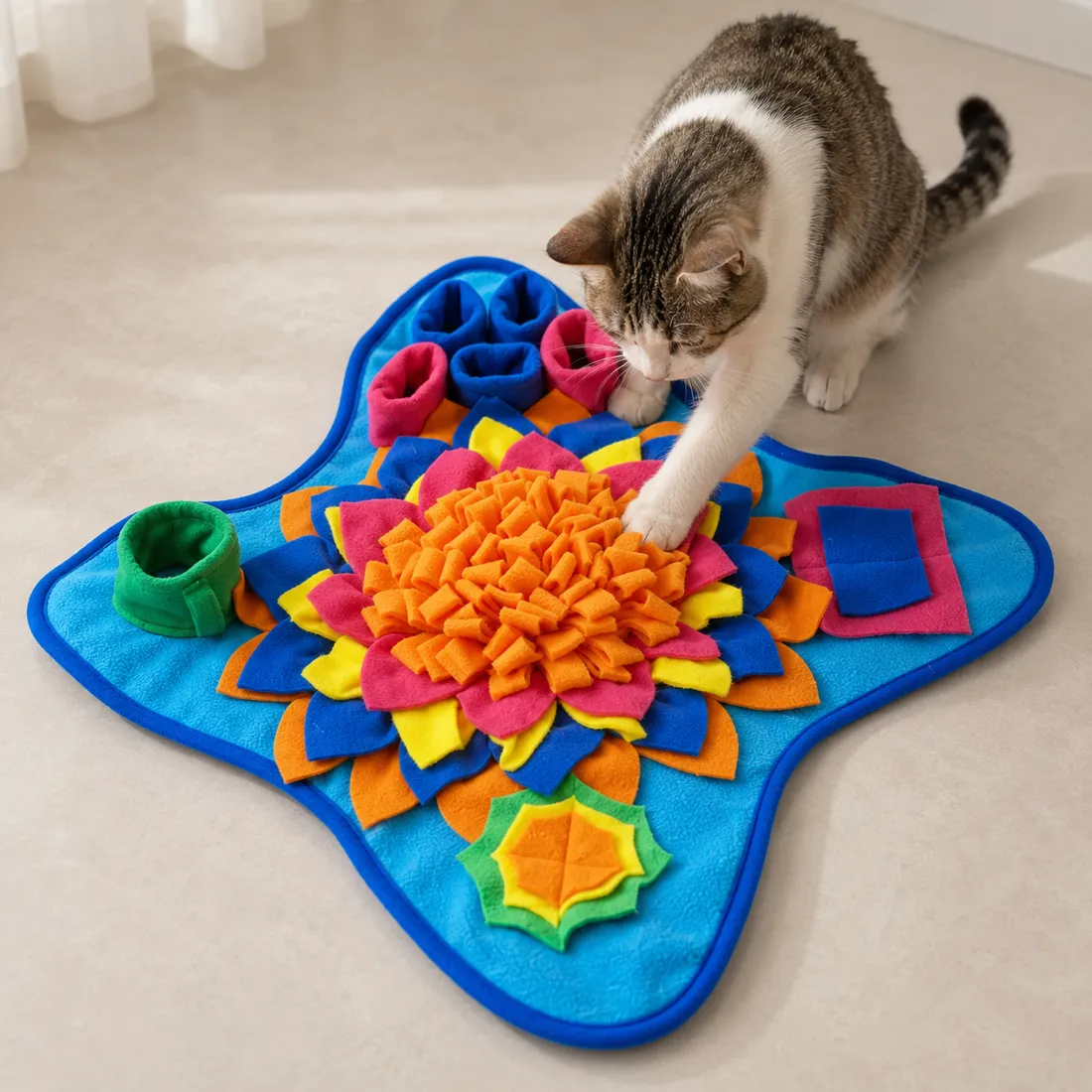
1. Snuffle mat
A fleece mat with food hidden in the folds turns a plain meal into a scent puzzle. It is my go-to first tool because it is simple, endlessly reusable, and works for nearly any dog. It is one idea on this list rather than the whole answer, but it is a strong starting point. The what is a snuffle mat guide explains the mechanics if the concept is new to you.
2. Scatter feeding
The zero-cost version of the snuffle mat. Toss a handful of kibble across the lawn or a towel and let your dog hunt each piece out by nose. It slows a fast eater down, and slower eating is sensible given what the research on gulping tells us.
lifetime bloat (GDV) risk estimated in Great Danes, with faster eating named among the risk factors, so activities that pace a meal are worth building in for deep-chested dogs
3. Frozen and lick-based treats
Smear wet food or plain yogurt on a lick mat, or freeze broth in a rubber toy, and you get a long, calming activity. Licking is self-soothing for dogs and buys you a quiet twenty minutes, which is gold on a stressful evening.
4. The muffin-tin game
Drop treats into the cups of a muffin tin, cover each cup with a tennis ball, and let the dog nose the balls off to claim the food. It is a free, home-built foraging puzzle that most dogs solve with obvious delight.
Mental and problem-solving ideas
5. Puzzle feeders
Commercial puzzle toys ask a dog to slide, flip, or lift compartments to release food. They are excellent for teaching persistence, though many dogs solve a given puzzle quickly, so buy adjustable ones or rotate a few rather than relying on a single toy forever.
6. Trick and training games
Five minutes of teaching a new trick is real mental work and it strengthens your bond at the same time. Shaping a behavior, where you reward small steps toward a goal, makes a dog think hard. Keep sessions short and upbeat, and stop while the dog still wants more.
7. Name games and find-it
Teach your dog the names of a couple of toys, then ask it to fetch each by name. Or hide a favorite toy or a person and send the dog to search. These games layer scent, memory, and problem-solving into one activity and they scale up as your dog gets sharper.
Physical ideas
8. Flirt pole
A flirt pole is a long stick with a lure on a rope, and it lets a dog chase, chase, and pounce in a small space. It is a superb outlet for chase-driven dogs and a quick way to burn energy, though you should keep sessions short and let the dog win the lure to avoid frustration.
9. Fetch and tug variations
Plain fetch is fine, but you can enrich it by adding rules, such as a sit before each throw, or by rolling the toy into long grass so the dog has to sniff it out at the end. Tug, played with clear start and stop cues, is another great physical release and it is perfectly safe to let your dog win.
Social and environmental ideas
10. Social time with the right partners
For sociable dogs, a calm playdate with a well-matched friend or a relaxed group walk meets a genuine need. Read your own dog honestly here, because not every dog enjoys the company of others, and a forced social session is stress rather than enrichment.
11. Sniffari walks
A sniffari, sometimes called a decompression walk, is a walk led by the dog's nose rather than the clock. You slow down and let your dog stop, sniff, and read the neighborhood as long as it likes. It looks like doing nothing and it is deeply satisfying for a dog, since it is scent-led exploration in its purest form.
of regular nose-work games made pet dogs measurably more optimistic on a cognitive bias test, evidence that scent-led activity supports a dog's mood
— Duranton & Horowitz, Applied Animal Behaviour Science, vol. 211, 2019
12. Toy rotation and novel objects
Novelty is enrichment in itself. Keep most of your dog's toys in a box, put out only a few at a time, and swap them weekly so the old ones feel new again. A safe new object to investigate, such as a cardboard box or a paper bag with a treat inside, delivers a burst of interest for free.
Building a weekly routine
You do not need all twelve every day, and trying would exhaust both of you. A workable rhythm is one nose-work or food activity most days, a training game a few times a week, a physical outlet like the flirt pole or a tug session for high-energy dogs, and a proper sniffari when you have time to slow down. Rotate what you offer so the week has variety, and watch your dog to see which category it lights up for.
| Category | How often | Example |
|---|---|---|
| Nose-work and food | Most days | Snuffle mat meal, scatter feed, lick mat |
| Mental | A few times a week | Five-minute trick session, puzzle feeder |
| Physical | Daily for high-energy dogs | Flirt pole, fetch with rules, tug |
| Social and environmental | Weekly | Sniffari, playdate, toy rotation |
If you are just starting out, the easiest first step is a daily scent activity, because it delivers the most calm for the least effort. A snuffle mat is the tidiest way to do that indoors, and you can read the case for it in are snuffle mats good for dogs or make your own using how to make a snuffle mat. For young dogs, the snuffle mat for puppies page covers where enrichment fits into early development.
Common questions
What is dog enrichment?
It is any activity that lets a dog express its natural behaviors, including sniffing, foraging, chewing, chasing, and problem-solving. Enrichment supports mental and physical wellbeing, and it sits alongside regular walks and training rather than replacing them.
How much does a dog need each day?
Most dogs do well with one or two short enrichment activities a day on top of their walks. Ten to twenty focused minutes of nose-work or a food puzzle is often plenty, and quality matters more than quantity.
Does mental enrichment actually tire a dog?
Yes. Scent work and problem-solving are genuinely tiring, and many owners find their dog rests more deeply after a foraging session than after a short walk. It works the mind, so keep physical exercise in the mix as well.
Ready to add the simplest daily activity to your dog's routine? See the best snuffle mat guide, read verified owner feedback on the reviews page, and take a look at the Sniffgrove snuffle mat.
One easy daily activity · Machine washable · Free shipping