
· By Erin Walsh, Canine Enrichment Trainer
Are Snuffle Mats Good for Dogs? A Look
I sell snuffle mats, so you have every right to read a glowing verdict from me with a raised eyebrow. That is the starting point. What I can offer in return is years of watching real dogs use these mats, the good sessions and the ones that went sideways, plus the handful of published studies that actually bear on the question. My aim here is to give you both halves, the genuine benefits and the real limits, so you can decide for your own dog.
The short version is that snuffle mats are a low-risk, high-value tool for the large majority of dogs, and they are not magic. They will not fix a serious behavior problem on their own, they are not a substitute for a walk, and a small number of dogs need closer watching than others. Let me take the benefits and the cautions one at a time.
The real benefits
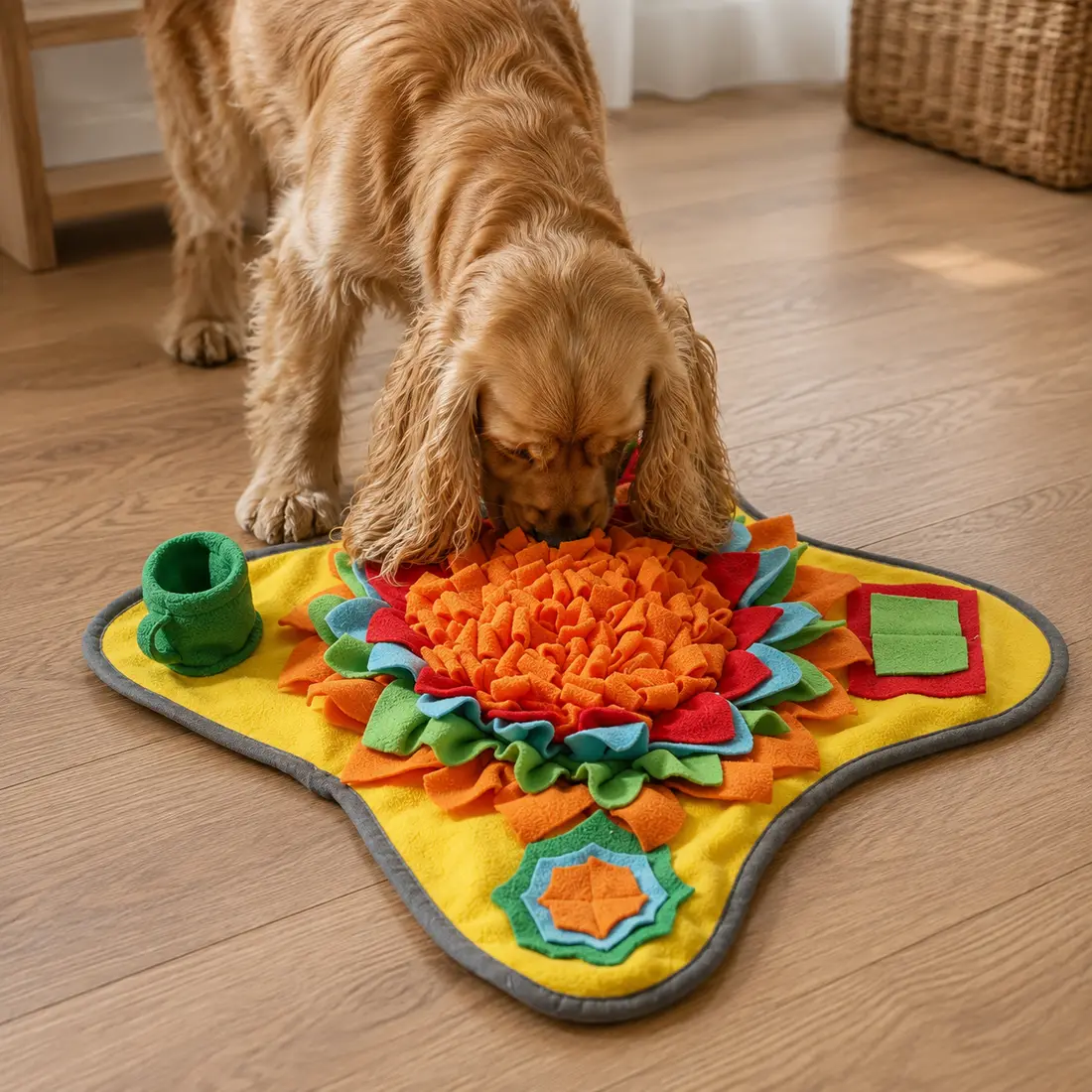
The headline benefit is mental exercise. Foraging by scent is demanding work for a dog, and a focused search burns mental energy in a way that surprises owners the first time they try it. A dog that finishes a snuffle session often settles down and rests, which is why I reach for the mat on days when a full walk is off the table because of weather, a busy schedule, or a recovering body.
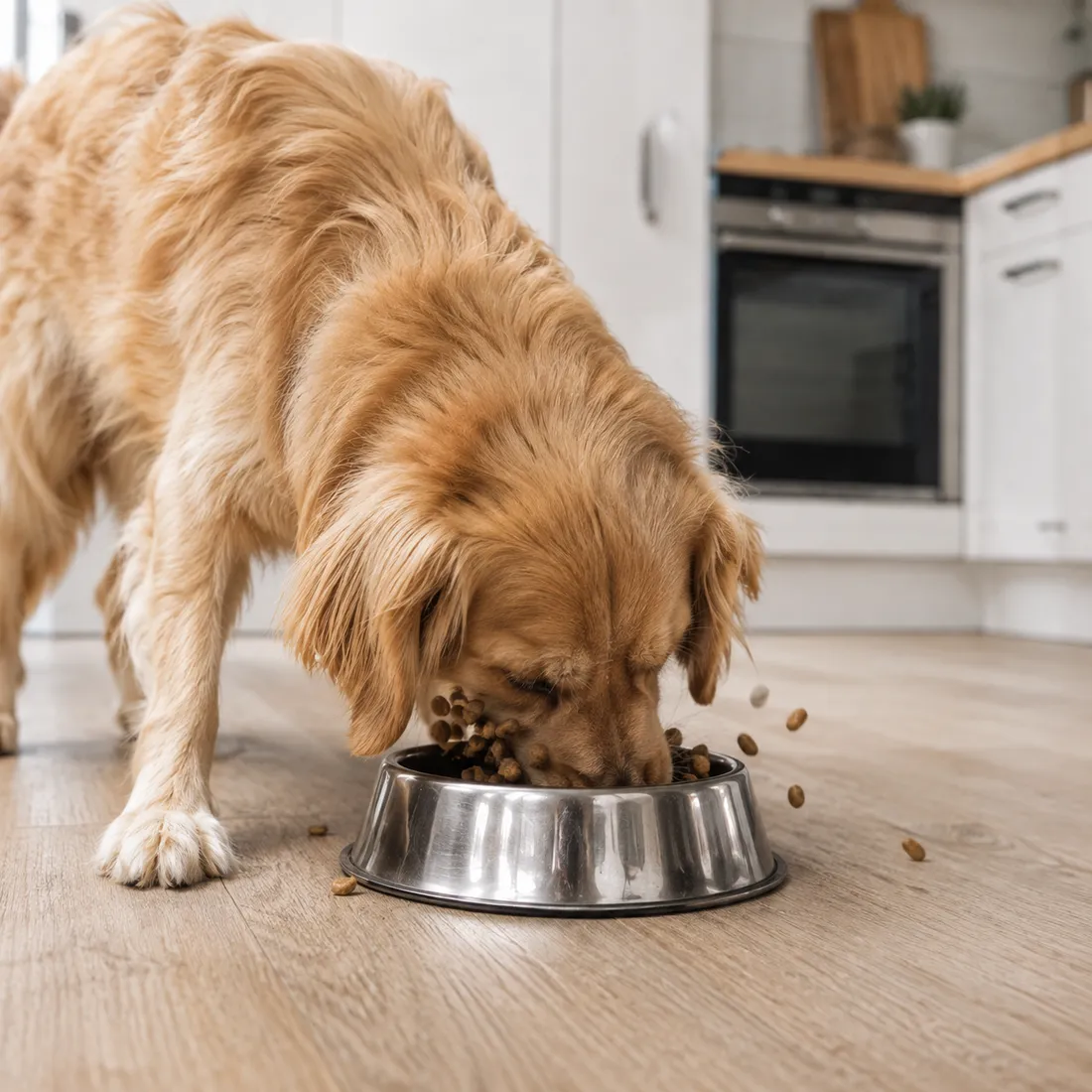
The second benefit is pacing the meal. A dog that hoovers a bowl in under a minute has to slow right down to pick each piece of kibble out of the fleece. That matters beyond good manners, because fast eating is one of the risk factors researchers have linked to bloat in large, deep-chested dogs.
lifetime bloat (GDV) risk estimated in Great Danes, with a faster speed of eating named among the risk factors, which is one reason slowing a meal down is worthwhile
I want to be careful here rather than oversell it. A snuffle mat slows eating, and slower eating is sensible for a gulper, but no mat prevents bloat, and dogs at real risk need a veterinarian's guidance. Treat the pacing as a helpful side effect, not a medical claim. The third benefit is calm. Sniffing is self-soothing for dogs, and a wound-up or anxious dog often downshifts noticeably after a few minutes of foraging.
What the research shows
The evidence base for snuffle mats specifically is thin, because the mats are a consumer product and not a research subject. What we do have is solid work on nose-work, the broader activity a snuffle mat delivers at home, and it points in a consistent direction. The most cited study let one group of pet dogs play scent games for two weeks and measured their outlook afterward.
of nose-work games left dogs measurably more optimistic on a cognitive bias test, while a comparison group doing heelwork did not shift, suggesting sniffing itself improved welfare
— Duranton & Horowitz, Applied Animal Behaviour Science, vol. 211, 2019
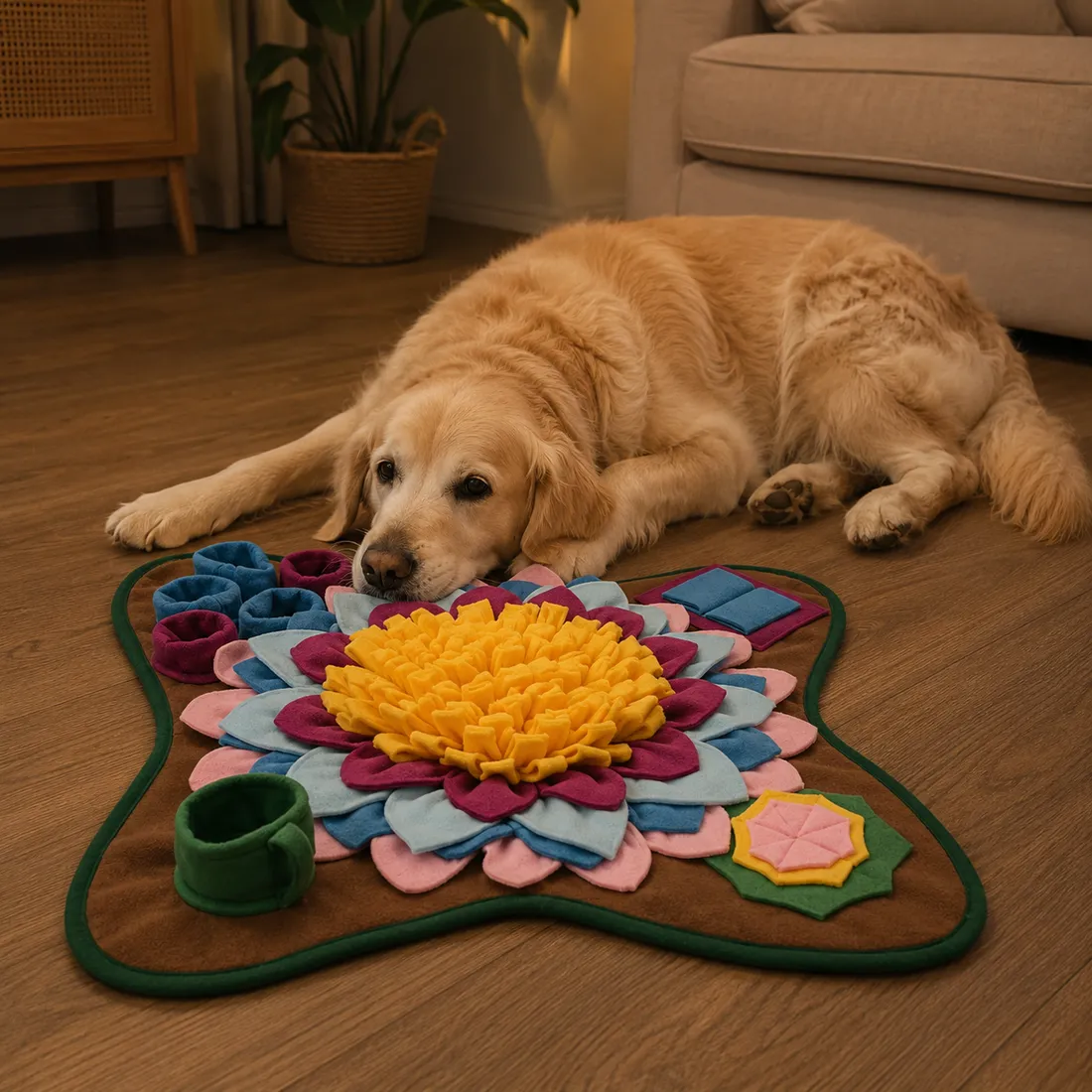
That study does not test a snuffle mat, and it would be dishonest to pretend it does. What it supports is the underlying principle: giving a dog structured time to use its nose is linked to better mood. A snuffle mat is one of the easiest ways to deliver that time at home, which is why trainers lean on it. The reason sniffing carries so much weight for a dog comes down to raw hardware.
olfactory receptors in a dog's nose, against roughly 6 million in a human's, so a scent search engages an enormous share of a dog's sensory world
What it covers
Now the part a seller is tempted to skip. Snuffle mats have three real limits, and knowing them makes you a better owner rather than a worried one.
| Limit | What to do about it |
|---|---|
| Fabric chewing and swallowing | Supervise every session. Dogs that shred and eat fabric can ingest fleece, which is a real hazard. Watch your dog and take the mat away once the food is gone. |
| Not a replacement for exercise | A mat works the mind, not the body. Keep it as a supplement to walks and play, never a stand-in for physical movement and outdoor time. |
| Frustration if introduced too fast | A dog that has never foraged can get frustrated by a fully loaded mat. Start easy and build up so the game stays rewarding. |
The chewing point is the one I stress hardest. Most dogs sniff and lick a snuffle mat and leave the fabric alone, but a determined chewer is a different case, and for that dog the mat is a supervised activity only, never a leave-alone toy. If your dog tends to eat things it should not, factor that in and keep an eye on the session from start to finish.
How to introduce one safely
A good first session sets the tone, so it is worth doing on purpose rather than dumping a full mat down and hoping. The goal is early, easy wins that teach the dog the game is fun and solvable.
- Start on top. For the first few tries, scatter kibble on the surface where the dog can see and smell it easily, so it learns the mat means food.
- Go deeper gradually. Once the dog is confident, start pressing food down into the folds and tucking pieces into the corner pockets to make the search last.
- Supervise throughout. Stay in the room, watch how your dog interacts with the fabric, and step in if it starts to chew rather than sniff.
- End on empty. When the food is gone, pick the mat up. Leaving it down invites boredom chewing and takes the shine off the next session.
Used this way, a snuffle mat slots neatly into a daily routine, often as the vehicle for one regular meal. It pairs well with the broader menu of activities in the dog enrichment ideas guide, and if you are new to the whole concept, the what is a snuffle mat explainer covers the basics. Puppies have their own introduction pace, which I lay out on the snuffle mat for puppies page.
Common questions
Are snuffle mats safe for dogs?
They are safe for most dogs when used with supervision. The one meaningful risk is a dog that chews and swallows fabric, so watch your dog while it forages and put the mat away once the food is gone. A washable mat also stays more hygienic, which matters for a toy that gets licked daily.
Can a snuffle mat replace a walk?
No, and it is important not to treat it as one. A snuffle mat delivers mental exercise and can genuinely tire a dog, but it does nothing for physical fitness, movement, or the outdoor stimulation a walk provides. Think of it as one part of a rounded routine.
How often should a dog use one?
Once a day suits most dogs well, frequently as a way to serve one normal meal. There is no prize for overdoing it, and rotating the mat with other games keeps a dog engaged rather than bored of the same puzzle.
If you have decided a mat is right for your dog, the best snuffle mat guide walks through sizes and builds, real owners share their experience on the reviews page, and you can see the Sniffgrove snuffle mat in all three colorways.
Machine washable · Free shipping · 30-day guarantee